
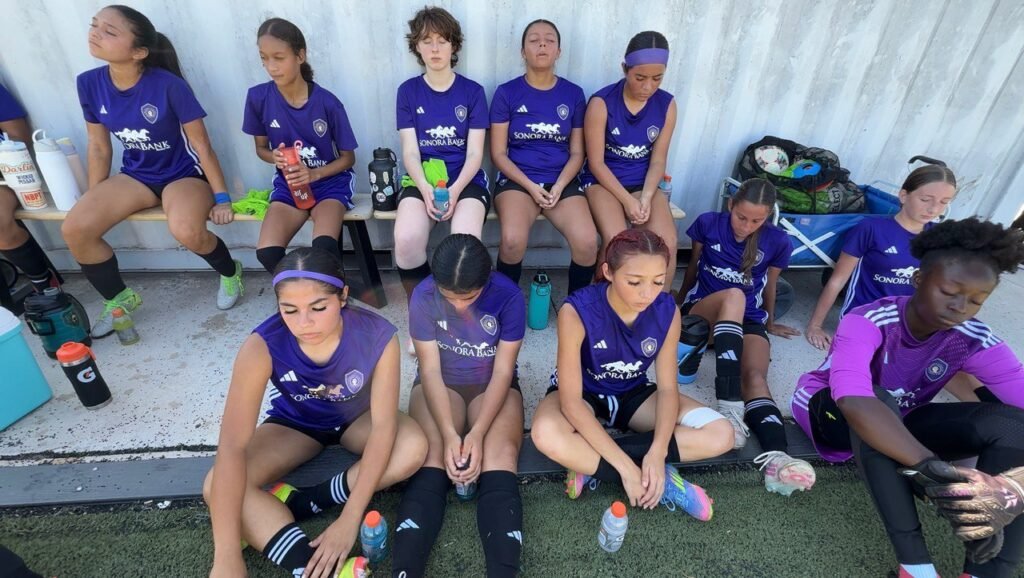
Introduction: A New Era of Athletic Training
You train your body.
You train your skills.
But have you trained your nervous system?
Welcome to the next era of athletic development — where performance starts in the mind, and your breath is the access point.
Today’s top athletes aren’t just adding reps. They’re rewiring how they respond to pressure, recover from intensity, and enter flow on demand. And they’re doing it through one of the most underrated tools in sport: their breath.
Let’s break down the science.
Your Breath Is a Remote Control for Your Brain
Your breath is the only system in the body that works on both autopilot and manual mode — which means you can use it to shift how your brain and body perform in real time.
When you train your breath consistently, you activate:
- The parasympathetic nervous system → calms the stress response
- The vagus nerve → improves heart rate variability (HRV), sleep, and recovery
- The prefrontal cortex → strengthens decision-making and emotional regulation
- Theta brainwaves → primes flow states and deep focus
🫁 Why Lung Training Is the Hidden Edge
Athletes are conditioned to train muscles, not lungs. But here’s what science says:
The respiratory system is often the limiting factor in endurance, focus, and recovery — not the legs or the core.
By training the breath like a muscle, you can:
- Improve oxygen efficiency
- Increase nitric oxide by up to 15x (boosting energy + focus)
- Delay fatigue and reduce inflammation
- Maintain composure when the game gets loud
And unlike most recovery tools, your breath is always available.
🧠 Breathe Better, Think Sharper
Your brain consumes 20% of your oxygen, and it shuts down fast when under stress.
When you’re in high-pressure moments — a tiebreak, a penalty shot, a race start — your performance doesn’t just depend on your training. It depends on your nervous system readiness.
Intentional breath training helps shift:
- From fight-or-flight to centered and clear
- From overthinking to instinctive action
- From stress loops to flow states
Athletes who train their breath aren’t just calmer — they’re more clutch.
🌍 What If There Was a Gym for the Mind?
Breathworks — a new kind of online experience where athletes log in not to lift weights, but to train something far more powerful:
🧠 Their focus, recovery, and emotional control.
It’s structured, guided, and science-based — built like a gym, but designed for the brain.
And it’s entirely virtual, so it travels with you — whether you’re in the offseason, pre-season, or mid-competition.
Think of it as your mental performance protocol, combining:
- Daily breathwork
- Flow-state training
- Visualization with intention
- Emotional reset tools
No fluff. Just a grounded, research-driven system for mental conditioning.
🧪 Visualization + Breath = Neural Reps
One of the most powerful combinations in the Breathworks approach is breath + visualization.
Research shows that visualizing with a calm nervous system is 10x more effective than visualizing in a stressed state. That’s because your brain fires the same pathways as if you were physically doing the movement.
Breath training creates the internal environment for this to land:
- Steady breath = calm brain
- Calm brain = receptive, focused state
- Receptive state = better learning and performance retention
This is how athletes learn to see it before they do it — with accuracy and emotion.
Athlete Results: HRV, Sleep, and Mental Control
“I went from having unstable HRV readings to consistent green balance readings within the first month of Breathworks” – Sara Free diver
Sarah’s story is one of many we’re seeing: athletes taking charge of their recovery, energy, and mindset — not through apps or gimmicks, but through consistent breath-based practice.
Her performance didn’t just improve.
Her resilience did.
Final Word: You’re Already Training Hard. Now Train Smart.
Breathwork is not just about calming down. It’s about strategically conditioning your brain and nervous system to handle intensity — and bounce back stronger.
If you’re ready to treat your mental game with the same discipline as your physical one…
You’re ready for the global online gym for the athlete’s mind.
🧠 Learn more → Breathworks