
In today’s competitive athletic landscape, physical talent and technical training alone no longer guarantee success. Coaches, athletes, and parents are increasingly recognizing that mental skills are foundational to both performance and long-term well-being. Research in sport psychology shows that building cognitive, emotional, and psychological resilience isn’t a luxury—it’s a performance multiplier.
1. Young Athletes Face Greater Psychological Demands
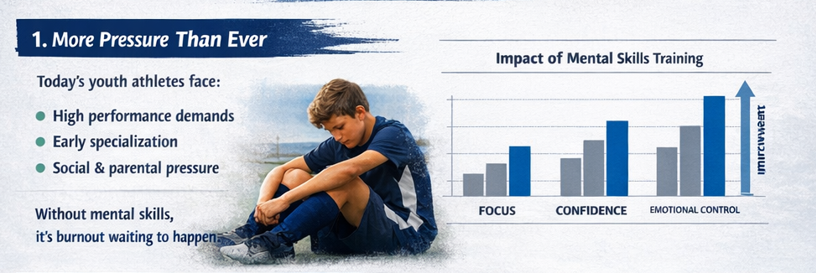
Youth sports today are more intense and structured than ever before. Early specialization, competitive calendars that mimic adult schedules, social pressures, and performance expectations from peers and parents have made youth sports less about play and more about proving worth. Without mental tools, athletes can experience burnout, anxiety, and loss of joy in the sport.
2. Mental Skills Improve Performance Under Pressure
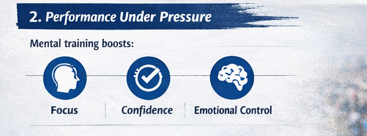
Studies show that structured psychological skills training—including breath control, arousal regulation, imagery, and self-talk—significantly benefits young athletes’ sport experience. In one intervention with swimmers and volleyball players, psychological training led to measurable improvements in domain-specific self-esteem and athletic confidence.
In broader reviews of cognitive sports psychology interventions, mental training consistently enhances athletes’ ability to handle stress, maintain focus, and perform under pressure.
3. Mental Resilience Enhances Long-Term Participation and Well-Being
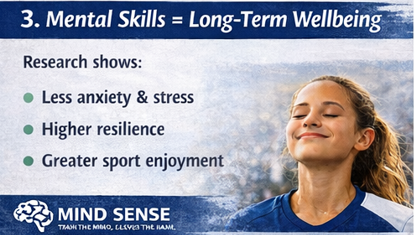
Youth who develop strong mental skills not only perform better—they stay in the sport longer. Organized sports participation has been linked to lower anxiety and depressive symptoms, improved social functioning, and better overall psychological health compared with non-participation.
Moreover, research highlights that mindfulness and resilience training helps athletes sustain focus, reduce anxiety, and bounce back from setbacks—key attributes for both sport and life.
4. Team Sports and Cognitive Development
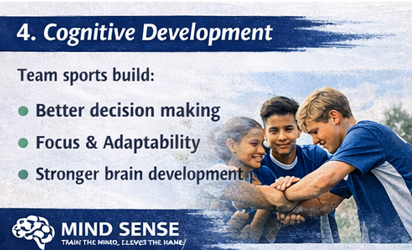
Participating in team sports like soccer is associated with stronger executive functions—such as decision-making, attention control, and adaptability—compared with individual sports or non-sport groups. This suggests that team environments may naturally support cognitive skill growth alongside physical training.
What This Means for Youth Sports and Training Programs
Investing in mental skills training helps athletes:
- Perform consistently under pressure
- Recover faster from mistakes
- Manage competitive stress and anxiety
- Build confidence and intrinsic motivation
- Enjoy sports with a healthy, sustainable mindset
Mental training is not about “fixing problems.” It’s about equipping athletes with lifelong tools that enhance performance, resilience, and joy in the game.
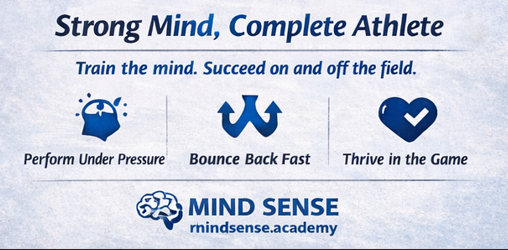
At Mind Sense, we believe that a strong mind makes a complete athlete. Mental skills training isn’t an add-on—it’s core to developing confident, resilient, and successful young athletes. This is why we have created virtual programs like Breathworks to make this training accessible and affordable for all athletes, in all sports and all levels.